


Starting from
US$580
Per adult (price varies by group size)
We offer group discount
1 personUS$580
2 - 4 personUS$487.2
5 - 8 personUS$452.4
Starting from
Per adult (price varies by group size)
1 personUS$580
2 - 4 personUS$487.2
5 - 8 personUS$452.4
Specific information about Mardi Himal Trekking Adventure - 7 Days
Duration
Trip Grade
Max Altitude
Starts at
Ends at
Travel Style
Group Size
Transportation
Best Season
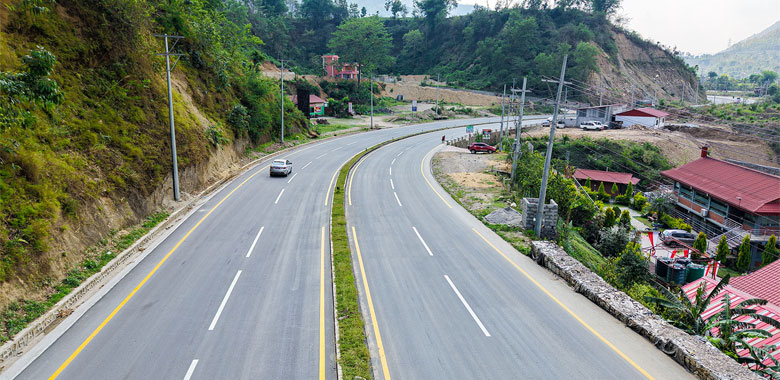
 Max. Altitude: 820m/2,690ft
 Walking Hours: 6-7 Hours Drive
 Meals: Breakfast
 Walking Distance: 200KM
 Transportation: Tourist Bus
 Accommodation: 3 Star Hotel
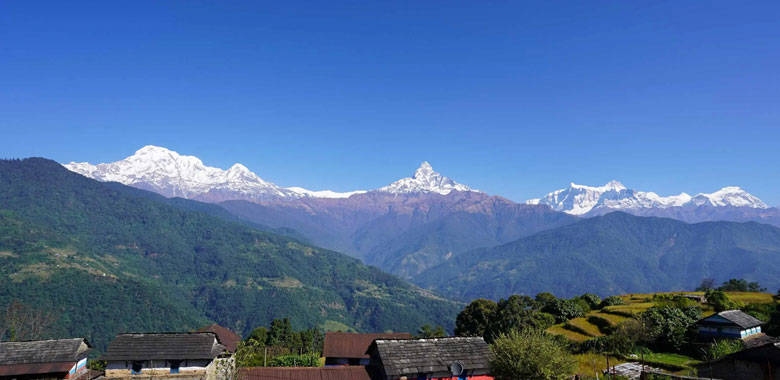
Max. Altitude: 1650m/5,413ft
Walking Hours: 4-5 hrs
Meals: Breakfast, Lunch and Dinner
Walking Distance: 12 km
 Elevation Gain: 830m/27,22ft
Accommodation: Mountain Lodge
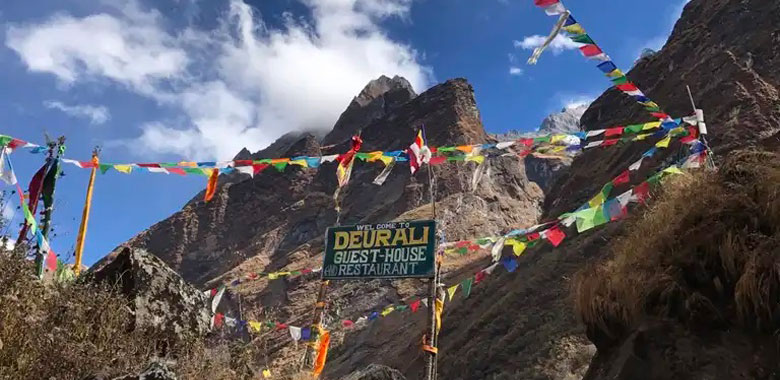
Max. Altitude: 2,990 m/ 9,810 ft
Walking Hours: 6-7 hrs
Meals: Breakfast, Lunch and Dinner
Walking Distance: 10 km
Accommodation: Mountain Lodge
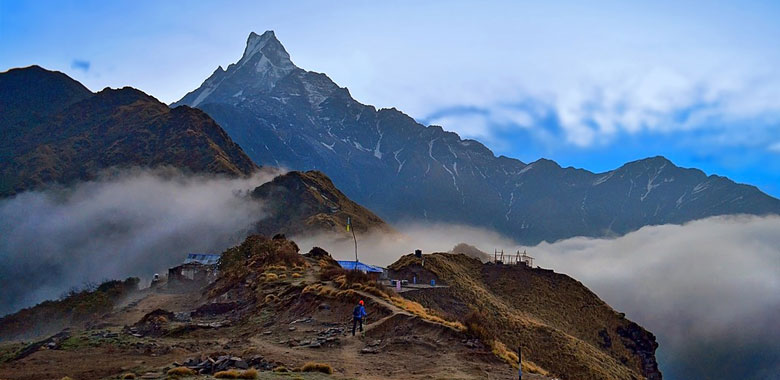
Max. Altitude: 3,580 m/11,745 ft
Walking Hours: 4–5 hrs
Meals: Breakfast, Lunch and Dinner
Walking Distance: 8 km
Accommodation: Mountain Lodge
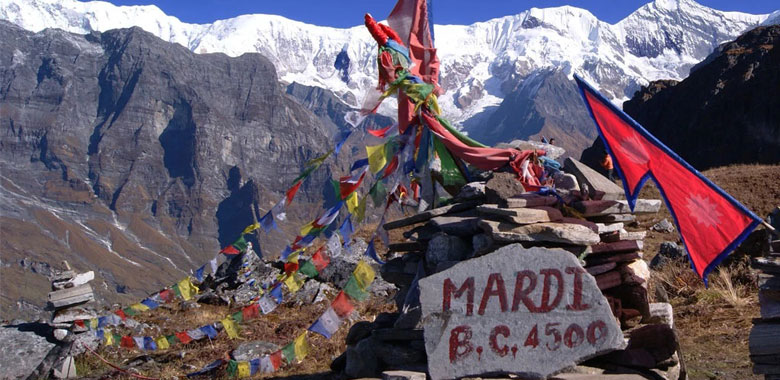
Max. Altitude: 4500m/14,765ft
Walking Hours: 7–8 hrs
Meals: Breakfast, Lunch and Dinner
Walking Distance: 12 km
Accommodation: Mountain Lodge
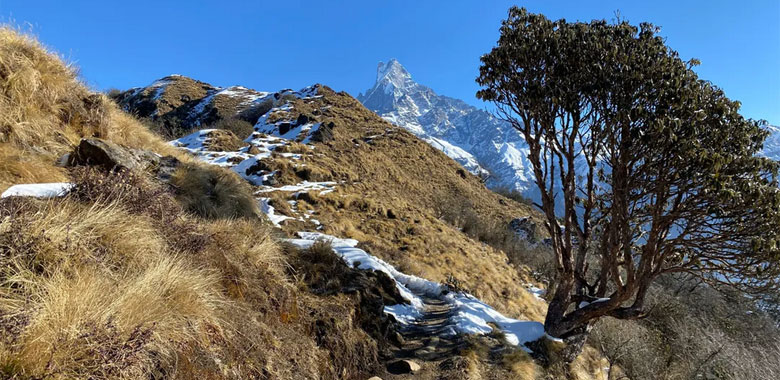
Max. Altitude: 820m/2,690ft
Walking Hours: 4-5hrs hike/2 hrs drive
Meals: Breakfast, Lunch and Dinner
Accommodation: 3 Star Hotel
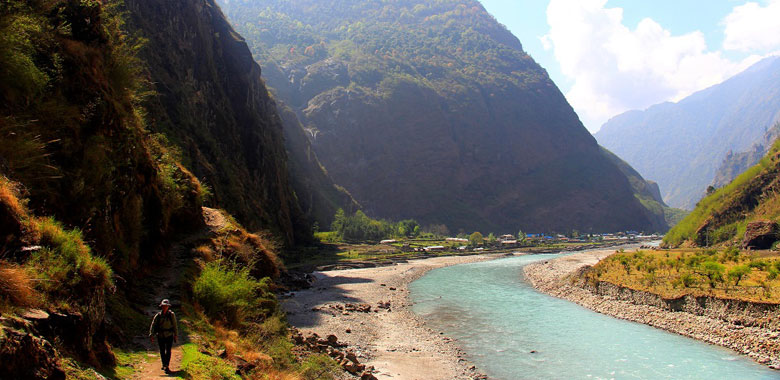
Max. Altitude: 1350m/4,429ft
Walking Hours: 7-8 Hours Drive
Meals: Breakfast and Dinner
Walking Distance: 200Km
Transportation: Tourist Bus
Comfortable tourist bus ride between Kathmandu and Pokhara (round trip).
Private transfers from Pokhara to Phedi (starting point) and from Sidhing to Pokhara (ending point).
All ground transfers between Kathmandu Airport and your hotel.
One night Hotel Hidden Kingdom or similar category in Pokhara (twin-sharing basis with breakfast included).
Five nights in trekking lodges/tea houses along the trail (generally twin-sharing rooms, simple but clean).
Nutritious three meals per day (breakfast, lunch, dinner) during the trek.
Seasonal fresh fruits.
Safe drinking water with purification tablets.
Experienced, licensed English-speaking guide (friendly and knowledgeable).
Support from porters (one porter for every two trekkers, carrying up to 18 kg).
Salaries, meals, insurance, and accommodation for guides and porters are fully covered.
Annapurna Conservation Area Permit (ACAP).
Trekkers’ Information Management System (TIMS) card.
All necessary government taxes and official fees.
Oximeter checks to monitor oxygen levels and prevent altitude sickness.
A first aid kit is carried by your guide.
Arrangement of emergency helicopter evacuation (covered by your travel insurance).
Complimentary use of a down jacket, sleeping bag, duffel bag, and walking pole (if you don’t have your own).
Company T-shirt and trek completion certificate.
Free luggage storage in Kathmandu during the trek.
Farewell dinner at an authentic Nepalese restaurant.
Path2Asia’s trek achievement certificate.
Your international flights to and from Nepal.
Nepal entry visa (available on arrival at Tribhuvan International Airport – approx. $30 for 15 days, $50 for 30 days, $125 for 90 days).
Any hotel stays in Kathmandu (before or after the trek).
Extra hotel nights in Pokhara or Kathmandu due to early return, flight delays, or other reasons.
Lunch and dinner in Pokhara or Kathmandu (only breakfast is included in Pokhara).
Travel insurance (must cover emergency rescue at high altitude).
Personal gear and clothing (hiking boots, jackets, etc.).
Personal expenses like snacks, alcohol, soft drinks, hot showers, battery charging, Wi-Fi, laundry, or extra porter service.
Tips for your guide, porter, and driver (tipping is customary in Nepal).
Extra costs may result from unforeseen circumstances, such as political strikes, natural disasters, or itinerary changes due to weather or safety concerns.
Any costs not explicitly listed under the "What's Included".
The Mardi Himal Trek requires balancing comfort and safety through proper gear and clothing, as you'll be trekking across varying altitudes and weather conditions. Layering is key to dealing with the changing weather conditions, as you might have to face sudden rain, wind, and snow. While packing your essentials, ensure they are of the perfect fit and carry only what's necessary to save luggage space and reduce weight.
We recommend you rent these items at Kathmandu or Pokhara to save expenses, and try them at least once before beginning the journey. Here’s a detailed packing list for the Mardi Himal Trek, organized from head to toe, plus extras, with explanations for why each item is essential:
Hat or Cap (Protects from intense sun)
Warm Beanie (Keeps your head and ears warm)
Buff or Scarf (Useful for wind protection, dust, or extra warmth)
Sunglasses (UV-protective sunglasses reduce snow glare at higher altitudes)
Headlamp with Extra Batteries (Essential for early starts, trekking in low light, or emergencies)
Base Layers (Long-sleeve Thermal Tops)
Trekking Shirts (Moisture-Wicking)
Fleece or Insulating Jacket (For warmth during cold weather)
Down or Synthetic Jacket (Lightweight and essential for freezing nights)
Rain Jacket or Shell (Waterproof and windproof)
Trekking Pants (Lightweight & Quick-Dry)
Thermal Bottoms/Leggings
Shorts (Optional but helpful in warmer, lower elevations)
Waterproof Overpants (Optional, but protects against rain or muddy trails)
Lightweight Gloves (For cooler mornings or windy trails)
Insulated Gloves (Necessary for warmth)
Glove Liners (Optional)
Trekking Boots (Waterproof & Broken-in)
Camp Shoes or Sandals (Lightweight shoes to relax in the evening)
Hiking Socks (Moisture-Wicking, prevent blisters, and keep feet dry)
Thermal Socks (For higher elevations)
Gaiters (Optional, but protect against mud, snow, or debris)
Daypack (25–35L)
Duffel Bag (Carried via porter)
Trekking Poles (Reduce stress on knees and provide stability on steep trails)
Sleeping Bag
Water Bottle or Hydration Bladder (Refillable along the trail)
Personal First Aid Kit (Include blister pads, painkillers, and altitude sickness medicine)
Toiletries (Biodegradable Soap, Toothbrush, Toilet Paper)
Sunscreen & Lip Balm (High SPF)
Camera / Smartphone
Power Bank / Charger
Snacks & Energy Bars
Travel Documents / Cash (Permits, ID)
Hand Sanitizer & Wet Wipes (Maintain hygiene in remote areas)

Discover Asia, Discover Yourself.
14501 Grand Ave., Burnsville, MN, 55306 trips.path2asia@gmail.com Whatsapp : 6126019136