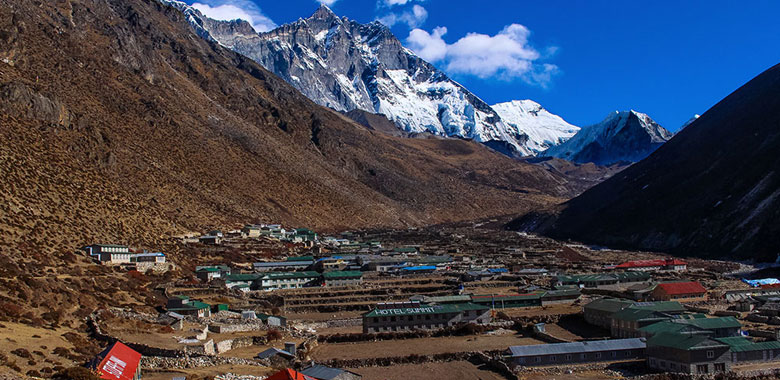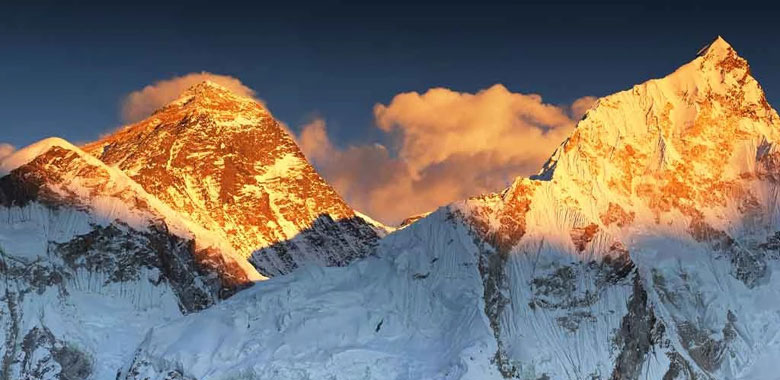

Phakding
Phakding
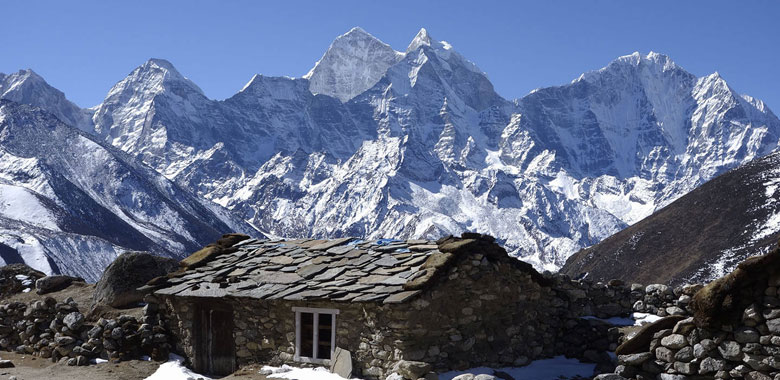
Tengboche
Tengboche
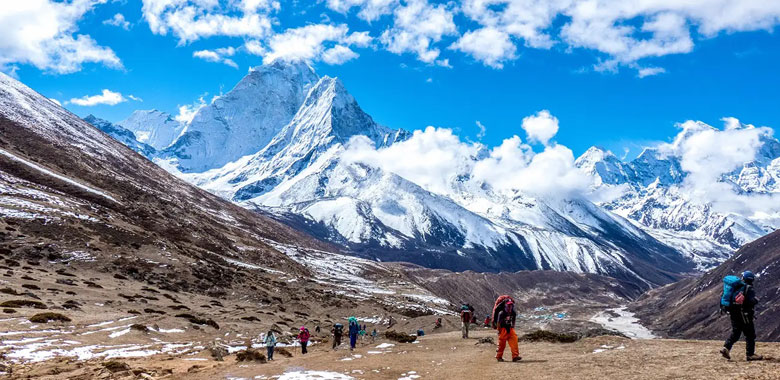
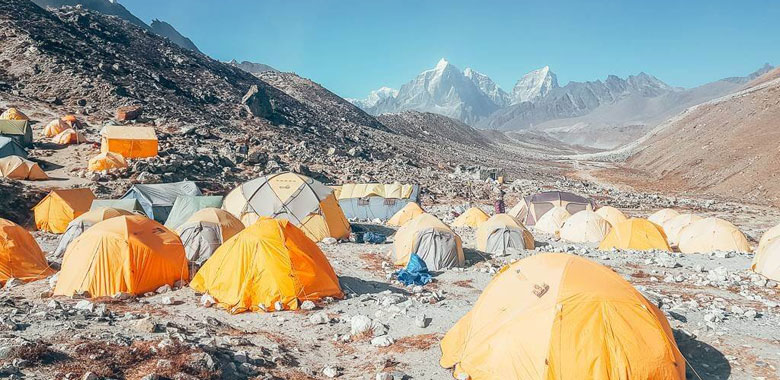
Dingboche
Dingboche
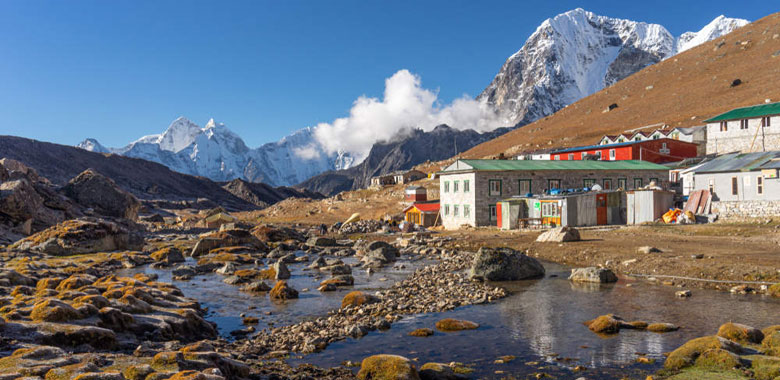
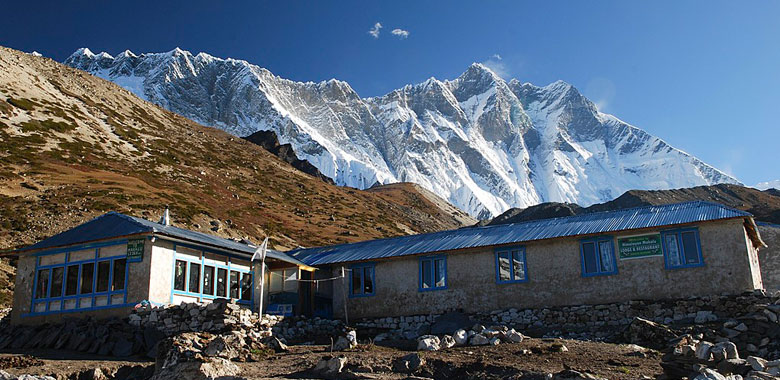
Lobuche
Lobuche

Starting from

US$2760

Per adult (price varies by group size)

We offer group discount

1 personUS$2760

2 - 4 personUS$2318.4

5 - 8 personUS$2152.8

JOIN UPCOMING DEPARTURES

Everest Base Camp to Island Peak Journey - 16 Days

What to see & do

Specific information about Everest Base Camp to Island Peak Journey - 16 Days

Duration

16 Days

Trip Grade

Very Strenuous

Max Altitude

6160m

Starts at

Kathmandu

Ends at

Kathmandu

Travel Style

Trek and Climbing

Group Size

8

Transportation

Aeroplane

Best Season

Spring and Autumn

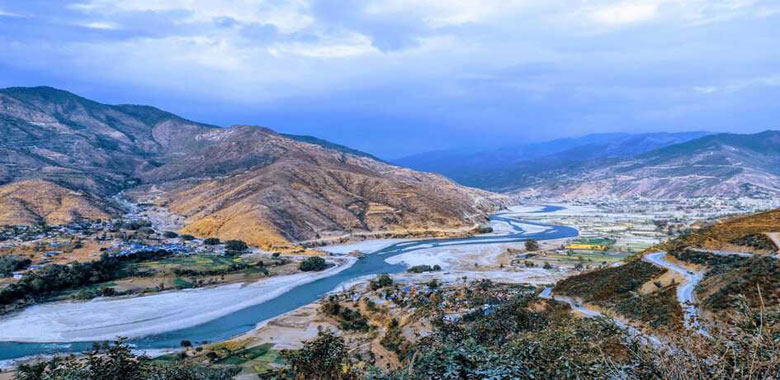
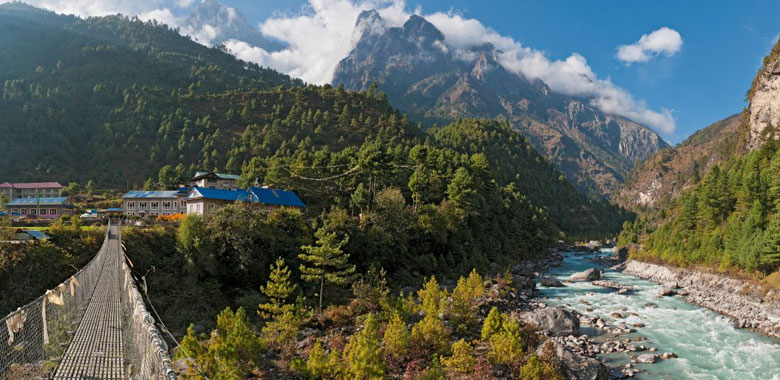
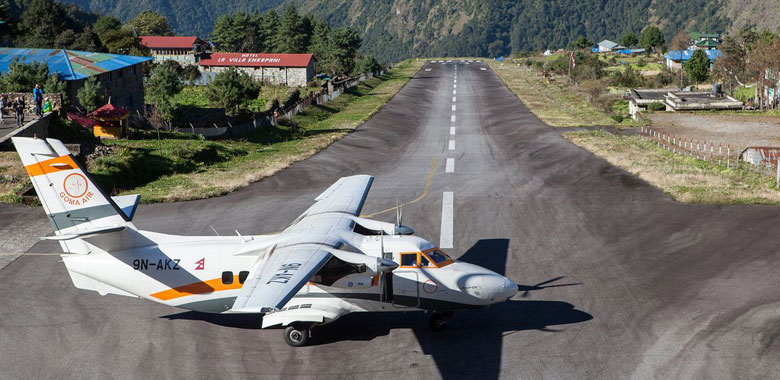
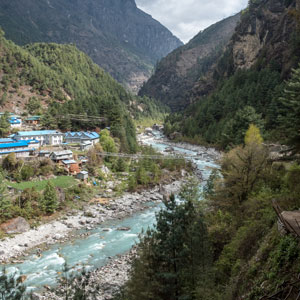
After having early breakfast at the hotel in Kathmandu, we will drive you to Kathmandu Airport for your morning flight to Lukla. The 35-minute scenic flight to the small mountain airport of Lukla would be an exciting one. As soon as you leave Kathmandu, you will be greeted by verdant hills and nearby mountains. After landing in Lukla, our trekking guide will introduce the porters and the rest of the team. We will have a fulfilling lunch before starting the trek to Phakding. Your tour guide will lead you down a busy street in Lukla. To get to Phakding, you must first hike for 4 hours through cedar and pine forests alongside the Dudh Koshi River. You will be served a delicious Nepali meal for dinner, and you'll spend the night at a Phakding teahouse. Note: During the peak travel season, the Lukla flights depart from Ramechhap Airport, which is about a 4 to 5-hour drive from Kathmandu. In this case, Path2Asia will arrange a drive for you to Ramechhap so you can catch your flight.

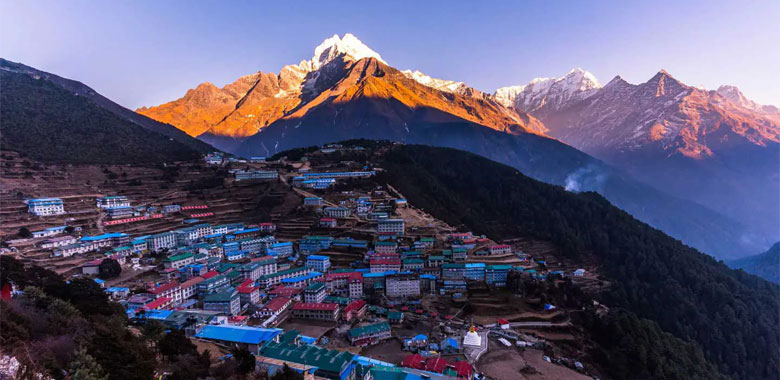
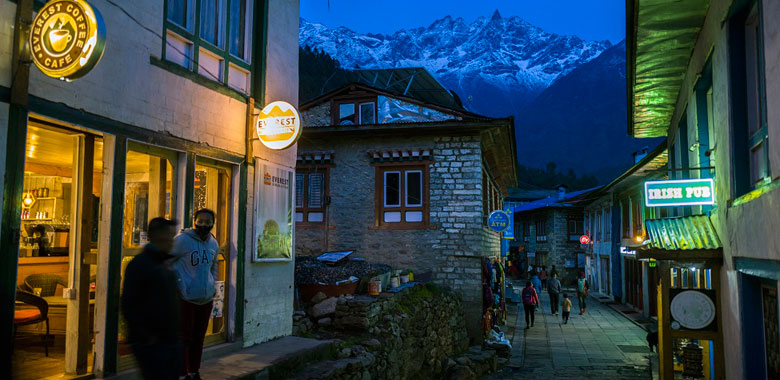
After having breakfast at the lodge, we start our day. The trekking route follows the Dudh Koshi River, crossing it a few times. We enter the Sagarmatha National Park in Monjo, where we will stop for lunch and again continue the trekking. After a few hours of walking, Namche Bazar will appear ahead. We walk along the path surrounded by pines, pass the plateau where the Saturday bazaar is held, and enter the Himalayan town of Namche Bazar (3440m). Namche is surrounded by mountain ranges on three sides and opens out on one side, where it faces the Duch koshi. The village is a central hub of the area. One can purchase anything from Tibetan souvenirs to mountaineering requirements here.

Today is our first acclimatization day of the trip. We acclimatize in Namche Bazar in order to acclimate our bodies to the high altitude. Acclimatization does not mean a complete rest day, though. We keep moving our bodies. We trek to Thame, go to Khunde, or take a tour of Namche Bazaar. Namche, a prominent town in the Khumbu region, has numerous cafes, banks, and other establishments. We advise a hike of a few hundred vertical feet to acclimate adequately. We can visit the Sherpa Cultural Museum or Sir Edmund Hillary's Khunde Hospital. Both the Syangboche Airstrip and the Everest View Hotel may be reached via short hikes. Hiking there is one of the options. The stunning views of the entire Himalayan range, including Everest, Nuptse, Lhotse, Ama Dablam, Thamserku, and Kusum Kangaru, from these vantage spots will surely captivate you.

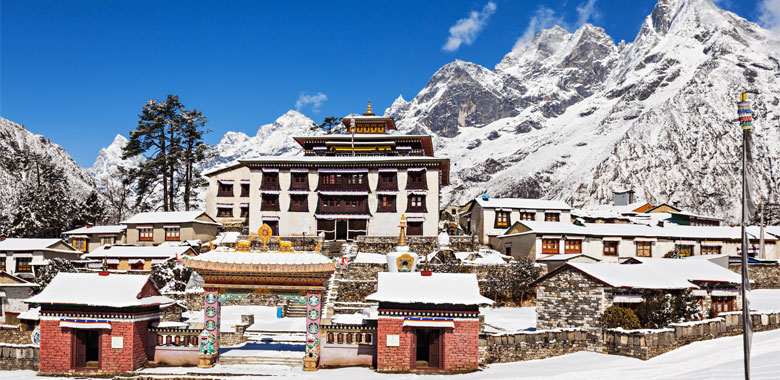
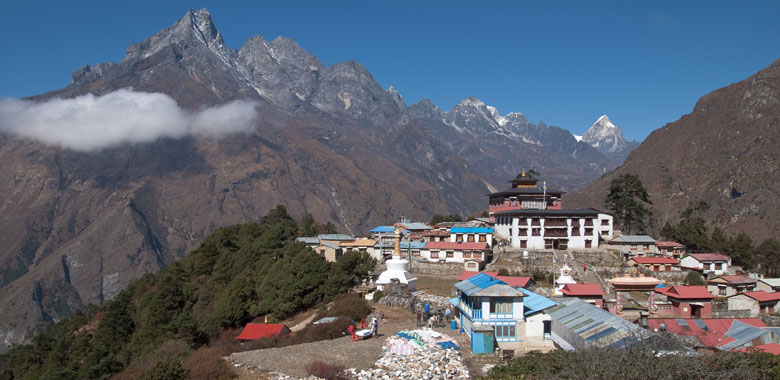
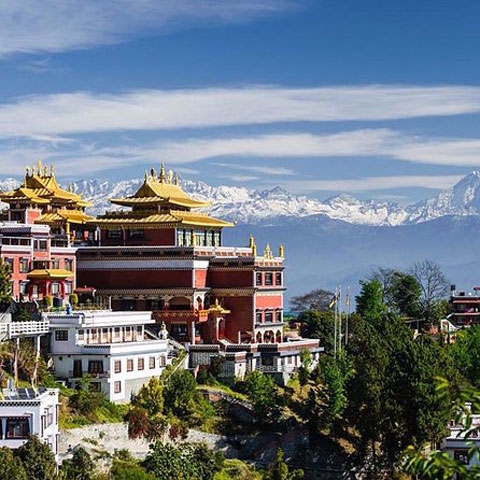
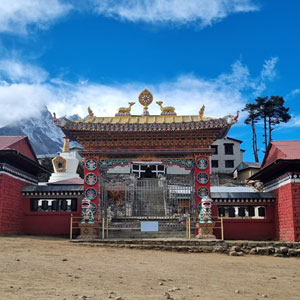
We start our day hike from Namche Bazaar in the early morning after breakfast. The walk up to Phunki Thenga is only a short distance. From here, we proceed to the Tengboche hamlet, which is home to the Tengboche monastery, the biggest and most well-known monastery in the Everest region. The sanctuary offers views of the Himalayas, including Mt. Everest, Nuptse, Lhotse, Ama Dablam, and Thamserku. If we go to the Tengboche Monastery by three o'clock, we can see a Buddhist religious ceremony. We spend the night in a tea house in Tengboche.

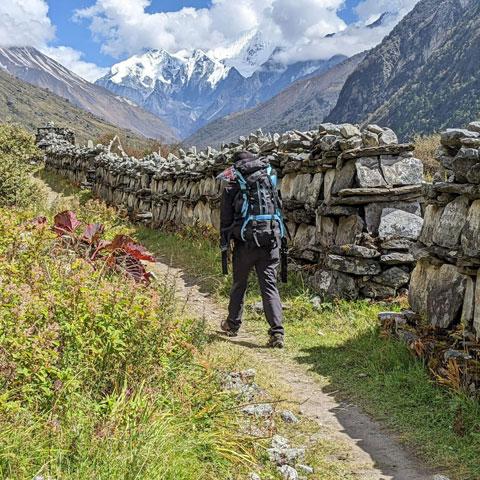
Today, we will travel from Tengboche to Dingboche, which is located at an elevation of 4,350 meters. Before crossing the river, the trail begins to climb and then progressively descends slopes through Rhododendron forests. Then, as we approach Pangboche, we will gradually ascend, passing a long Mani stone wall. From Pangboche, we'll keep going to Shomare, where we'll stop for lunch. We'll resume our ascent toward the Imja Valley after lunch. You will reach Dingboche after traveling for 40 minutes, passing some landslide zones on your left along the way. Atop the town is where our lodge is located. Today's walk will take 5 to 6 hours in total. We'll spend the night at Dingboche.

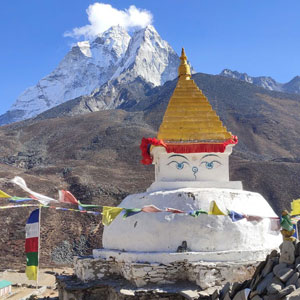
We'll spend one more night in Dingboche today as we continue to acclimatize. We will climb for around two hours in the morning to a local hilltop with an elevation of 4,900 meters (16,076 feet). We have magnificent views of Ama Dablam, Island Peak, Lhotse, and the surrounding mountains at this altitude. Depending on the weather, we will take in the scenery for about an hour. To prepare our bodies for greater altitudes, spending some time at this elevation is crucial. We'll return to Dingboche for lunch and spend the afternoon unwinding and hydrating. We spend the night again at Dingboche.

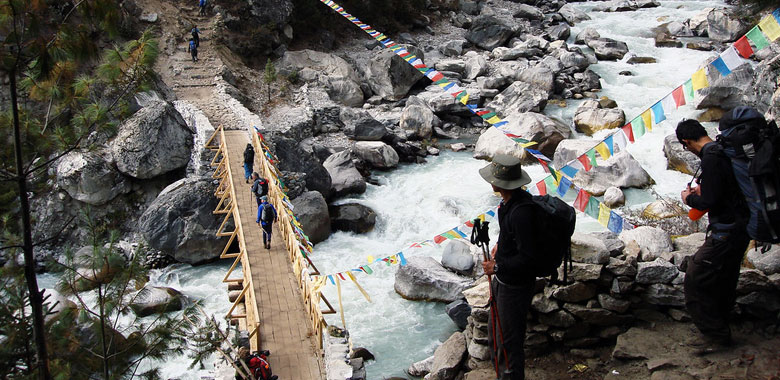
After a fantastic Himalayan breakfast, the day hike begins. Once you arrive at the stupa, the steady trail descends to the town of Pheriche. Along the way, you can enjoy stunning views of mountains, including Mt. Nuptse, Mt. Tawache, Ama Dablam, and others. On your way to Pheriche, you'll pass Thukla and a little wooden bridge. You will see a memorial to those who died while attempting to cross this dangerous terrain as you continue on your journey. Extremely steep ascents are required to reach Lobuche. Despite the challenging climb, the greater views we enjoy as we get nearer to Lobuche motivate us to press on. In Lobuche, we spend the night in a tea house.

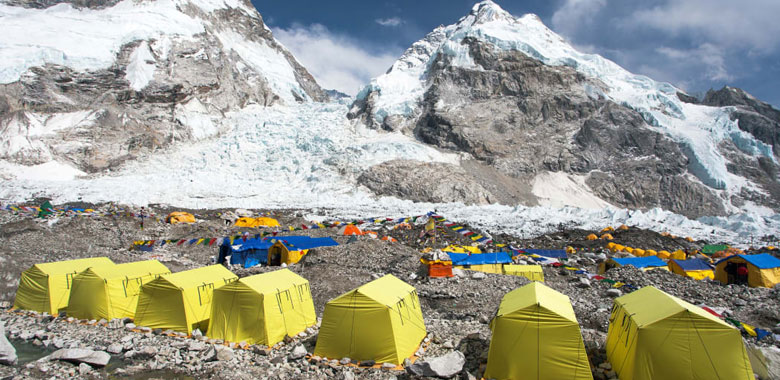
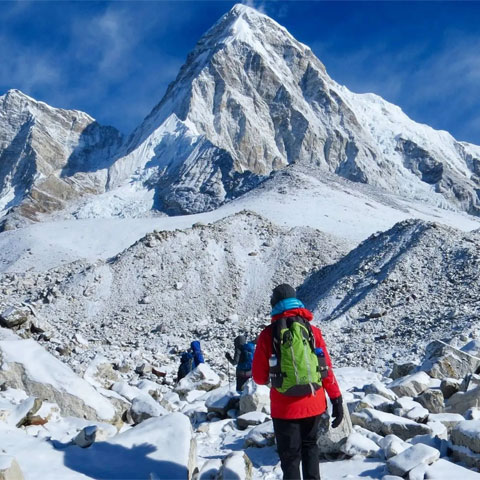
After breakfast at the lodge, we start our trekking journey to the Everest Base Camp today, following the rocky moraine path and viewing the icy glacial pond and icebergs down below Khumbu glacier. After the last rocky moraine dunes, a short downhill walk brings us to Gorakshep, where we will stop for lunch and leave all our stuff at the lodge, as this is the last place where a lodge is available. We continue towards EBC breathing the thin air heavily at this high altitude. As we approach Everest Base Camp, we are astounded by the sight of the mountaineers' tents, which contrast sharply with the monotonous, lifeless surroundings. From the base camp, we can see the Nuptse, Khumbuste, and Pumori mountains. We spend some time taking pictures and enjoying the scenery at the Base Camp. Then, we climb back to Gorakshep for a satisfying night's sleep.

Today, we'll get up early and hike up Kala Patthar. At a height of 5,545 meters, Kala Patthar is reached by a steeply ascending trail that leaves from Gorak Shep. We'll need around two hours to climb to the top, but it will be worthwhile for the views! Panoramas of the Himalayas glistening in the golden beams of sunrise, including the well-known Mount Everest, will be our reward for this exhausting morning hike. After taking in the views from the summit of Kala Patthar, we will return to Gorak Shep, which will take about an hour. There, we will prepare our luggage and enjoy breakfast before setting out on our journey. Retracing our steps through Lobuche and the Everest Memorial, we typically stop for lunch in Thukla before continuing to Dingboche. After a 6-7 hour journey, we will reach Dingboche, where we'll stay the night to recharge for our upcoming journey toward Island Peak.

We'll get one step closer to our goal today. We will now move toward the more challenging trails to Island Peak Base Camp after spending the night in the picturesque village of Dingboche. We will take in the breathtaking views of mountains like Lhotse, Island Peak, Nuptse, etc., as we continue on the trek to the higher portions of Imja Valley with a steady ascent. Out of Chhukung, we will proceed along the glacier moraine before descending onto the Imja Lake runoff. Before reaching a level sand plain in front of Island Peak and Lhotse, the trail winds through a series of tiny slopes. From here, we will proceed around Island Peak's right flank, which will take us directly to Island Peak Base Camp. In around 6-7 hours, we'll make it to Island Peak Base Camp while admiring the stunning scenery and mountains. We will spend the night in a far-off location without any tea houses or other lodging options today. We'll erect our Camp today and spend the night there in tents. You will be supplied with food items, culinary equipment, and cooks so that you can have a wholesome dinner even in the chilly base camp.

Today is a crucial acclimatization day on our 20-day Island Peak Climbing excursion. Altitude sickness is possible now that we have successfully surpassed the 5000-meter mark. The responsible course of action is to take a break from climbing forward and give your body the rest it requires. One of our experienced guides will consult you to ensure that you are in the greatest possible shape for the upcoming climb. Today is also a day of preparation because tomorrow is the day we will ascend Island Peak. After breakfast, our Sherpa guides will give a quick lesson on peak climbing techniques and how to use climbing equipment such as ice axes, harnesses, ascenders, climbing boots, and crampons. It is a good day to tour the base camp. You can spend the day exploring a lake nearby. Imja Lake is a lovely lake with fantastic views of the adjacent mountains. You can spend the day taking in this breathtaking setting while getting some rest in preparation for your upcoming journey.

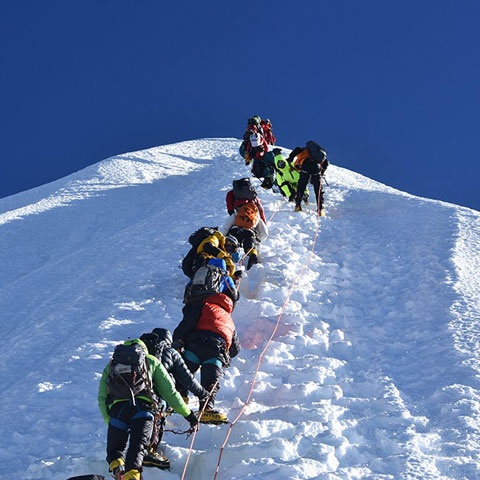
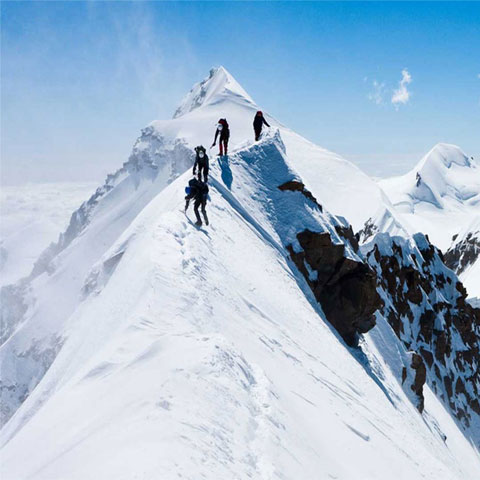
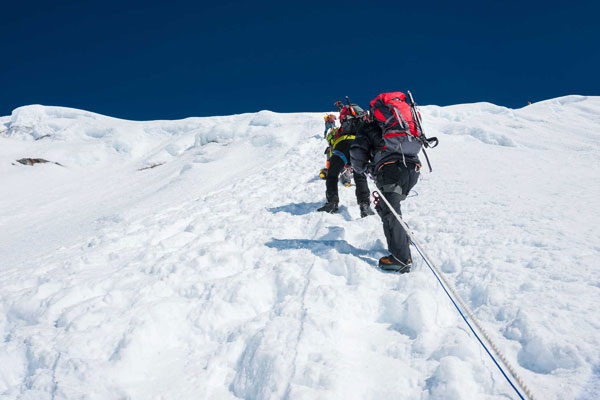
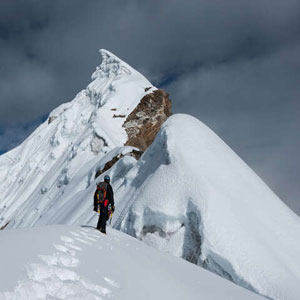
The day we've been waiting for is finally here! The 6,165-meter Island Peak will be our target today. It is a long and difficult climb, and since we have to reach the summit before noon as it can be extremely windy afterward, we have to depart early, at 2 a.m. Although climbing Island Peak doesn't need technical proficiency, it does require strength and endurance. But you do need to have some fundamental mountaineering skills and know how to avoid accidents. From the bottom of Camp, the path ascends hundreds of meters before encountering a steep incline that is initially covered in sand, then grass, and eventually stones. Before entering a steep rock valley (a small channel of rock), the path gradually narrows. We eventually reach the other side of the valley after taking several steps across and through it. For your safety, your guide might attach a rope to each climber to help them up the last snowy slope to the summit ridge. Depending on the season and the risk of fissures, the rope may frequently extend to 350m. Ladders are needed to access some of these crevices because they can be up to 3 meters wide. We will reach Island Peak's summit after the arduous ascent up the Headwall. The views from the summit are absolutely breathtaking! Because the peak is so small, you must keep your clip in the rope. Once you have enjoyed the sight and taken the photos, we will get ready to descend the Headwall. In order to safely abseil down a fixed line, you must be well-trained and equipped. We will rope back up after coming down from the Headwall and proceed back through the glacier to the crampon point. We can remove our climbing gear from here and continue walking back down the trail to High Camp. When we get to Camp, we'll take a break, pack up, and descend the trail for an hour to Base Camp. Here we'll have a meal, and if time permits, we'll head further down to Chhukung, which will take about 2 hours.

Today is a long hiking day, but since the trail is downhill, it won't be much of a problem. Using the same route, we took to the top, we will gradually descend to Pangboche while passing through the settlement of Dingboche. We will cross the Imja River, and then ascend for an hour through the forest to reach Tengboche. Although it is a long and difficult day of trekking, it is also stunning. The Ama Dablam, Lhotse, and Everest mountains will be among the breathtaking views we will witness today. One of the most significant monasteries in the Khumbu region, Tengboche, will also be open for our visit. where we can unwind and recover. Additionally, we'll get to go shopping, stroll around the town, and celebrate our ascent with a few drinks.

Today is a long hiking day, but since the trail is downhill, it won't be much of a problem. Using the same route, we took to the top, we will gradually descend from Tengboche while passing through the settlement of Phunke Thanka. We will descend from Tengboche to the Phunki Thenga Dudh Kosi Bridge. We will observe water-powered prayer wheels at Phunki Thenga. We'll then trek down to Namche Bazaar after crossing the bridge. Although it is a long and difficult day of trekking, it is also stunning. The Ama Dablam, Lhotse, and Everest mountains will be among the breathtaking views we will witness today. One of the most significant monasteries in the Khumbu region, Tengboche, will also be open for our visit. We will reach Manjo village after a strenuous day of hiking, where we can unwind and recover. Additionally, we'll get to go shopping, stroll around the town, and celebrate our ascent with a few drinks.

Today is the Island Peak Climbing expedition's final day of hiking. After breakfast, we prepare to depart from Manjo. We shall pass by the Phakding settlement on our route back to Lukla. From Manjo to Dudh Koshi, it could be a descent. The continual hills will put your core to the test. Once you've passed over the suspension bridge, the path will start to level off a little. We take one last stroll through rhododendron groves while taking in the snow-covered Himalayas. At Lukla, we spend the night in a mountain lodge.

Today, you return to Kathmandu on an early-morning flight. You will take in one more sight of the snow-capped Himalayas as you fly thrillingly to Kathmandu from Lukla. Enjoy the view and bid farewell to the hills and mountains. The majority of them can now be seen clearly from your window. When you arrive in Kathmandu, Path2Asia's driver will pick you up and take you to your hotel in Thamel. The remainder of the day is yours to do as you like.

End Of Trip

What's inside the package?

Inclusions

Complimentary pickup and drop service will be provided during your arrival and departure from a private vehicle.

Accommodations are in a highly reputed hotel in Thamel, Kathmandu, and there are well-facilitated teahouses along the trail.

Three meals a day during the trek.

Seasonal fruits and snacks.

Documents necessary include the Island Peak climbing permit.

Khumbu Pasang Lhamu Rural Municipality fees.

The Sagarmatha National Park Entry Permit.

Government taxes and official expenses.

Flights from Kathmandu to Lukla and vice versa.

An experienced and licensed holder Climbing guide and porter, including his salary, insurance, transportation, food, drinks, and accommodation.

Medical supplies and an oximeter to check your pulse and oxygen level in your blood.

Complimentary use of a down jacket, duffel bag, and sleeping bag.

The arrangement for emergency evacuation via helicopter is covered by your travel insurance.

Path2Asia's cap and T-shirt.

Exclusions

Meals, drinks, beverages, and snacks outside of the itinerary.

Nepal entry visa fee and international flight tax.

International airfare.

Medical and travel insurance.

Personal expenses.

Any form of alcoholic or non-alcoholic beverage.

Battery charge, hot water shower, and Wi-Fi in tea houses.

Excess baggage charge of more than 10 kg during the Lukla flight.

Tips for drivers, porters, and guides.

Anything not listed in the "Included" section.

Add-Ons & Options

a

Dates & Prices

Book your trip with confidence

Select a departure month

This is the list you particularly require for the Island Peak Ascent.

  • Handwear: Gloves and Hand warmers

  • Footwear: Trekking Shoes, Altitude Liner, Woolen socks, Trekking Socks, sandals

  • Headwear: Hiking caps, woolen hats, scarfs

  • Upper body: Down jacket, fleece jacket, thermal wear, hiking t-shirts, wind + waterproof jackets

  • Lower body: Down pants, trousers, thermal sets, hiking pants/shorts

  • Personal Equipment: Trekking Backpacks, Toiletry Bags, Sunblock lotions

  • Trekking Gears: Hiking poles

  • Climbing Gears: Ice Ax, Climbing Harness, Crampons, Karabiners, Belay Device, Ascender

  • Mountaineering Boots and Helmet

  • Ropes

  • Ice Crews

FAQs

"Everest Base Camp to Island Peak Journey - 16 Days" frequently asked questions

General Info

You will require a passport valid for 6 months from entry, a copy of travel insurance and flight tickets, and two passport-sized photos.

After you make the deposit, you will need to provide details like your arrival and departure date. Our staff members will then brief you with additional information related to the trek.

We advise booking your arrival and departure flights in advance for smooth travel. It is also recommended that you add a day or two additional days during your intended stay in case of flight cancellations or delays. Please be aware that we will not be responsible for any inconvenience related to international flights.

There are no hidden costs or fees if you travel solo. However, you will be charged accordingly if you don\'t want to join a group and would rather book a private trip.

The EBC Luxury Trek cost can range from USD 800 to USD 5000, depending on the itinerary, package, and service included.

Guide, Porter, and Trek Permits

Yes, hiring a guide is an integral part of a successful trek, even if you have previous trek experience. A guide\'s expertise will help create alternative plans and arrangements for unexpected occurrences.

Our guide and staff speak English; their speaking skills are based on field experiences rather than formal education. Even though they are not as fluent as native English speakers, they will be able to communicate effectively.

Hiring a porter(helper) is beneficial as they will be responsible for your luggage. This will allow you to hike freely without physically straining yourself. A porter(helper) will carry a maximum weight limit of 22 kg for every two travelers. If the weight limit exceeds, you will be charged accordingly.

Tipping is an act of expressing gratitude for the hard work and dedication of the guide and porter(helper). We suggest tipping based on the number of participants in a group and consider allocating at least 10% of the tip for every traveler.

You will need a Sagarmatha National Park Entry Permit (NPR 3300), TIMS (Trekkers\' Information Management System) (NPR 2000), and a Khumbu Pasang Lhamu Rural Municipality Permit, which costs NPR 3,000 per head for the trek. We will arrange these documents on your behalf.

Discover Asia, Discover Yourself.

  14501 Grand Ave., Burnsville, MN, 55306   trips.path2asia@gmail.com   Whatsapp : 6126019136
Partha Moktan : +1-4438000742
Kanchan Khadka : +1-6126019136

Newsletter

Get the Latest Travel Stories, Tips & Offers from Path2Asia.

All Rights Reserved for  Path2Asia

Powered by  krishna Tech